OpenAI's O1 Models: Deep Dive into Reasoning and Problem Solving
Hey everyone! My friend recently got access to OpenAI's shiny new O1 models (O1 and O1-Preview), and I've been lucky enough to play around with them. Let me tell you, these models are something else! They're designed for deep reasoning and problem-solving, making them perfect for tasks that require serious brainpower. Think advanced coding, scientific reasoning, and complex data analysis.
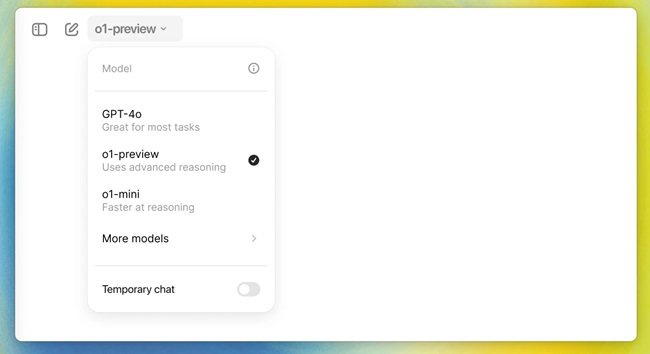
O1 vs. O1-Mini: What's the Difference?
The O1 series has two main players:
O1-Preview: This model is the powerhouse. It tackles complex problems using a vast pool of general knowledge.
O1-Mini: Need speed and efficiency? O1-Mini is your go-to. It's optimized for coding, math, and science tasks where broad knowledge isn't as critical.
Thinking Differently: O1 vs. GPT-4
Now, you might be wondering how these models stack up against the reigning champ, GPT-4. While GPT-4 excels at fast responses, image inputs, and versatility, the O1 models are all about deep thinking. They utilize a unique feature called reasoning tokens, allowing them to break down problems internally before spitting out an answer. This makes them ideal for complex challenges, even if it takes a bit longer.
Limitations and Workarounds
Keep in mind that the O1 models are still in beta. This means:
Text-only input: No images or other fancy inputs just yet.
Limited functionality: Some advanced features like function calling aren't available yet.
Prompting for Success: Getting the Most Out of O1
Here's the inside scoop on how to get the best results from O1:
Clear and specific prompts: Just like talking to a human, the clearer your instructions, the better the output.
Don't ask for reasoning steps: While you can ask for explanations, OpenAI wants to keep the inner workings of those reasoning tokens under wraps for now.
Experiment with delimiters: To encourage deeper thinking, try using delimiters like "```" or """" to separate different parts of your prompt. This can help the model understand the structure of your request and provide more thoughtful responses.
Coding Powerhouse: A Snake Game Example
One of the coolest things I've used O1 for is coding. I asked it to create a playable Snake game in Python, and it delivered! The code was clean, functional, and even included instructions on how to run it.
Final Thoughts
The O1 models are a huge step forward in AI. They're not just generating text; they're thinking. While still in their early stages, the potential for these models is immense. I'm excited to see what the future holds for O1 and how it will revolutionize problem-solving across various fields.
Mind Map: OpenAI's O1 Models
                           OpenAI's O1 Models
                                   |
                        --------------------------
                        |                      |
                     O1-Preview            O1-Mini
                        |                      |
                Deep Reasoning           Speed & Efficiency
                General Knowledge        Coding, Math, Science
                        |                      |
            -------------------------------------------------
            |                |                 |
    Reasoning Tokens    Text-Only Input    Limited Functionality
    Deep Thinking       (Beta Limitation)   (Beta Limitation)
            |
    -------------------------------------------------
    |               |                |
Clear Prompts   Don't Ask for     Experiment with
                Reasoning Steps    Delimiters


